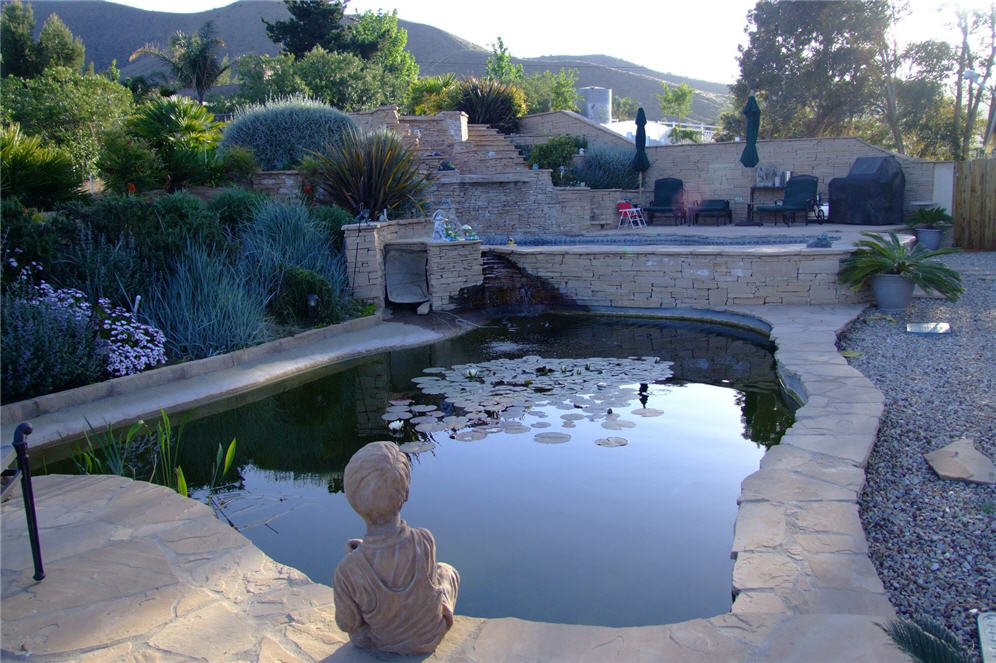
Common name:New Zealand Flax
Botanical name:Phormium tenax
New Zealand Flax is a large, bold plant with stiffly vertical, sword-like, green leaves that arise from its base. It should be grown under full sun for best color. Varieties will offer different growth habits and leaf color.
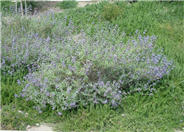
Common name:Chaparral Sage
Botanical name:Salvia clevelandii
This evergreen perennial takes a rounded shrub like form reaching 4' x 4' at a fast rate. It bears rounded whorls of blue to violet flowers that appear in skewered clusters from spring to summer. Both leaves and flowers are fragrant. Accepts full sun or partial shade. Attracts humingbirds. Native to southern California and Baja California.

Common name:European or Mediterranean Fan Palm
Botanical name:Chamaerops humilis
Slow growing multitrunked palm good for small areas and containers. Full sun or partial shade. Leaves have sharp spines. Native to Mediterranean and Africa.

Common name:Canyon Prince Wild Rye
Botanical name:Leymus condensatus 'Canyon Prince'
One of the best known and utilized native grass selections in Southern California, this beautiful, blue gray foliage spreads out 3'-4' or more. It will reach a height of 2'-3'. It rarely flowers. It does spread by rhizomes although not as vigorously as some closely related species. It can be extremely drought tolerant and care must be taken not to over water this species as it can rot from the center. Otherwise, it is carefree and requires virtually no maintenance.
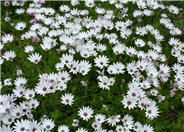
Common name:Freeway Daisy, Trailing African Dai
Botanical name:Osteospermum fruticosum
This groundcover will grow 1'-3' tall and has medium-sized, green leaves with purple or blue flowers that can bloom all year.
Designer:
Photographer: GardenSoft
Practice grass-cycling by leaving short grass clippings on lawns after mowing, so that nutrients and organic matter are returned to the soil.
Apply a 2" layer of mulch around plants to reduce moisture loss.
Choose organic mulches, such as shredded bark, compost, or aged sawdust.
Inorganic mulches such as gravel are also acceptable.
Attract, or buy beneficial insects such as ladybugs and lacewings to control pest outbreaks in your garden.